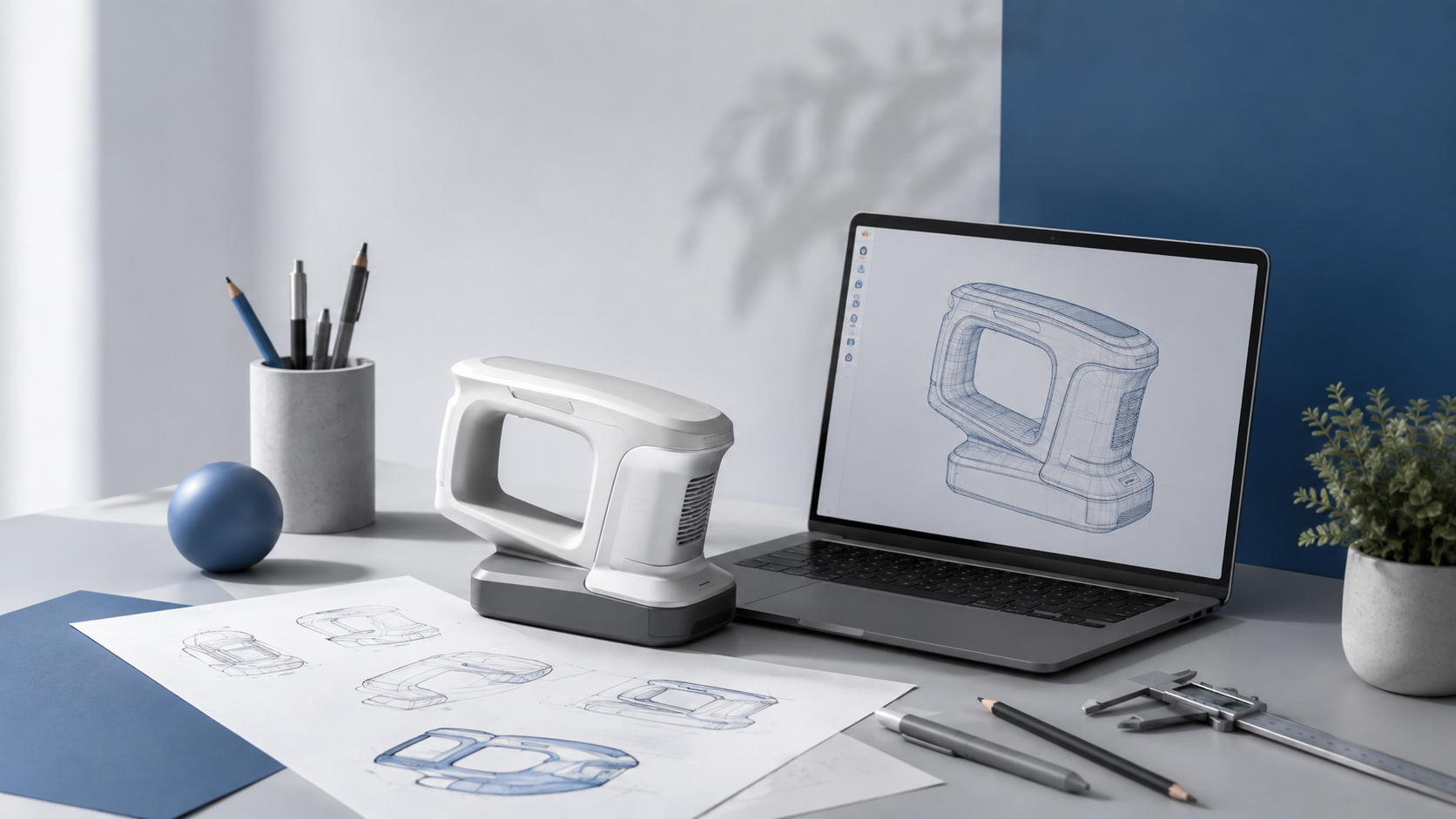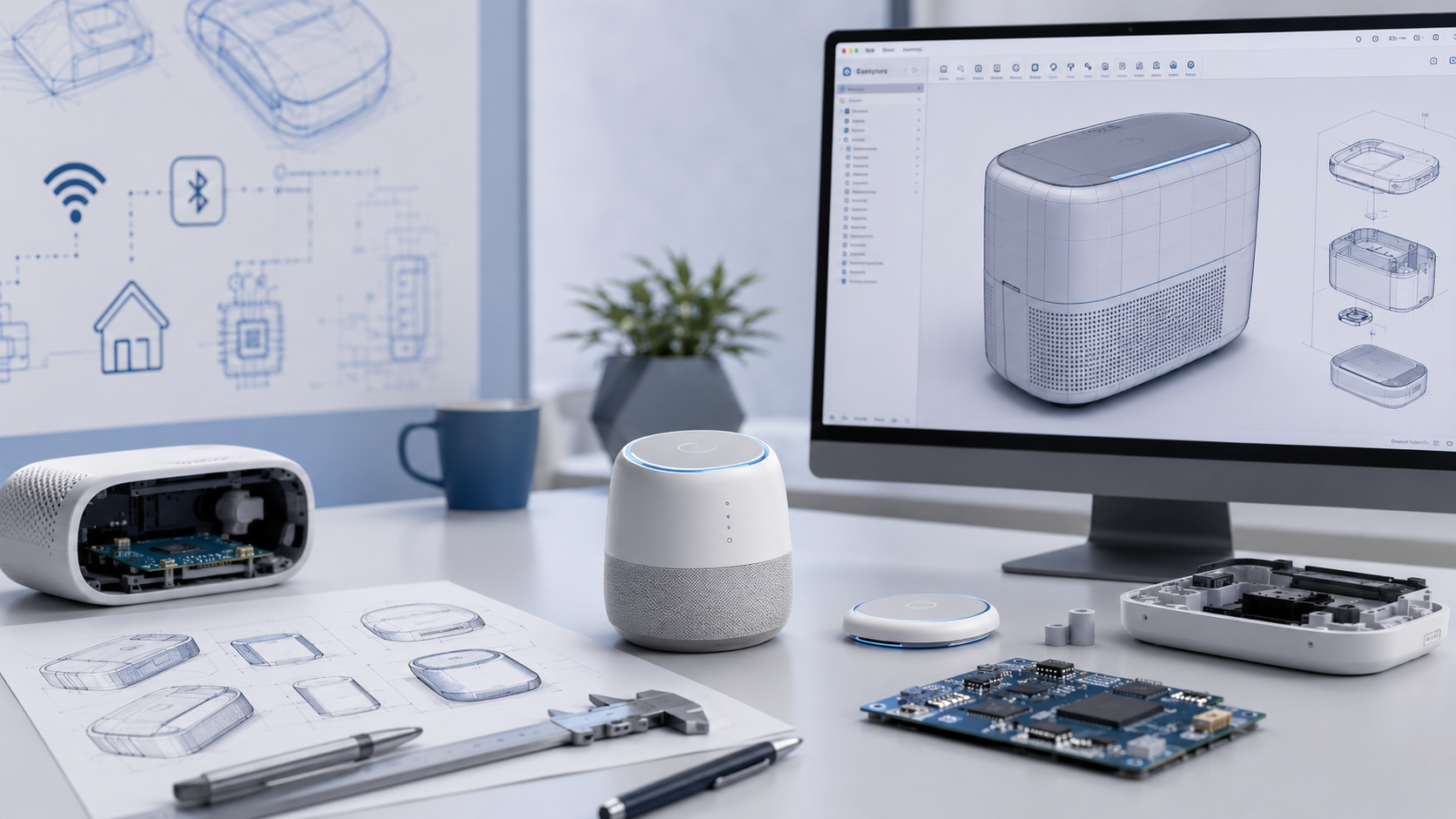
Consumer Electronics: Driving Innovation Through Intelligent Product Design
The consumer electronics industry is evolving at an unprecedented pace. From smart home devices and wearable technology to portable appliances and connected gadgets, today's consumers expect products that are not only technologically advanced but also intuitive, stylish, and reliable.
With rapid advancements in artificial intelligence (AI), the Internet of Things (IoT), wireless connectivity, and sustainable manufacturing, businesses must continuously innovate to remain competitive. Success is no longer determined solely by technical performance—it depends on delivering exceptional user experiences, seamless functionality, and compelling product design.
This is where industrial design and product engineering become critical. Every successful consumer electronic product begins with a well-planned development process that balances aesthetics, usability, engineering, and manufacturability.
Whether you're developing a smart appliance, personal gadget, home automation device, or electronic accessory, investing in professional product development can significantly improve product quality, reduce development risks, and accelerate time-to-market.
What Are Consumer Electronics?
Consumer electronics are electronic devices designed for everyday use by individuals and households. These products simplify daily tasks, enhance entertainment, improve communication, and increase productivity.
Common categories include:
- Smart home devices
- Wearable technology
- Audio and video equipment
- Kitchen appliances
- Personal care devices
- Portable electronics
- Home automation systems
- Gaming accessories
- Smart lighting
- Health and wellness gadgets
As technology becomes increasingly connected, consumer electronics are evolving into intelligent ecosystems capable of communicating with users and other devices in real time.
The Growing Consumer Electronics Market
Global demand for consumer electronics continues to rise as consumers seek smarter, more efficient, and energy-conscious products.
Several factors are driving this growth:
- Increasing adoption of IoT-enabled devices
- Rising demand for smart homes
- Growth of wearable technology
- Expansion of wireless connectivity
- AI-powered consumer products
- Focus on energy efficiency
- Rapid urbanization and digital lifestyles
Businesses that successfully combine innovation with user-centric design are better positioned to capture market opportunities and build long-term customer loyalty.
Why Product Design Matters in Consumer Electronics
Consumers today have countless product choices. A device that performs well but is difficult to use or visually unappealing is unlikely to succeed.
Effective product design ensures electronics are:
- Easy to operate
- Comfortable to handle
- Durable for daily use
- Visually attractive
- Efficient to manufacture
- Cost-effective
- Safe and reliable
Thoughtful design transforms technology into products that people genuinely enjoy using.
Key Stages of Consumer Electronics Product Development
Developing a successful electronic product requires collaboration between industrial designers, mechanical engineers, electronics specialists, and manufacturing experts.
Market Research
The process begins by understanding customer needs, competitor products, emerging technologies, and market opportunities.
Research helps identify gaps where innovation can create meaningful value.
Industrial Design
Industrial designers shape the product's appearance, ergonomics, and user interaction.
This phase focuses on:
- Form development
- User experience
- Material selection
- Product aesthetics
- Functional layouts
- Brand consistency
Every design decision contributes to customer satisfaction.
Mechanical Engineering
Mechanical engineers transform concepts into manufacturable products by designing:
- Internal structures
- Mounting systems
- Cooling solutions
- Component integration
- Assembly methods
Engineering ensures products remain reliable throughout their lifecycle.
Electronics Integration
Electronic components including PCBs, sensors, batteries, displays, motors, and communication modules are integrated efficiently within the product housing.
Successful integration balances functionality, thermal management, and compact design.
Prototype Development
Prototypes validate:
- Product dimensions
- Ergonomics
- Mechanical fit
- User interaction
- Functional performance
Early testing helps identify improvements before mass production begins.
Design for Manufacturing (DFM)
Manufacturing considerations influence every aspect of product development.
Design for Manufacturing helps optimize:
- Material utilization
- Tooling costs
- Assembly efficiency
- Production scalability
- Quality consistency
This approach reduces production costs while improving overall product quality.
Challenges in Consumer Electronics Development
Developing modern consumer electronics presents several engineering and design challenges.
Miniaturization
Consumers expect compact products with increasing functionality.
Designers must fit complex electronics into smaller enclosures without compromising usability or reliability.
Heat Management
High-performance electronics generate heat that affects performance and lifespan.
Proper ventilation, material selection, and internal architecture are essential for thermal management.
Battery Optimization
Portable devices require long battery life while maintaining lightweight construction.
Balancing power efficiency and performance is a key design objective.
Durability
Consumer products experience daily wear and tear.
Industrial designers select materials and structures that improve impact resistance, longevity, and product reliability.
Sustainability
Manufacturers are increasingly adopting recyclable materials, modular designs, and environmentally responsible manufacturing processes.
Sustainable product development reduces environmental impact while meeting evolving consumer expectations.
Emerging Trends in Consumer Electronics
Innovation continues to redefine the consumer electronics landscape.
Artificial Intelligence
AI-powered devices provide personalized experiences through automation, voice recognition, and predictive intelligence.
Smart Connected Devices
IoT enables products to communicate with smartphones, cloud platforms, and other smart devices, creating connected ecosystems.
Sustainable Product Design
Manufacturers are focusing on recyclable materials, reduced packaging, and energy-efficient electronics to support sustainability goals.
Touchless Interfaces
Gesture control, voice commands, and sensor-based interactions are becoming standard features across many consumer products.
Personalization
Consumers increasingly prefer products that adapt to their individual preferences, habits, and usage patterns.
Industries Benefiting from Consumer Electronics Innovation
Consumer electronics influence numerous industries, including:
- Smart Home Technology
- Healthcare Devices
- Home Appliances
- Fitness Equipment
- Educational Technology
- Automotive Accessories
- Office Productivity
- Lifestyle Products
- Entertainment Systems
As digital transformation accelerates, electronics are becoming central to everyday life across both residential and commercial environments.
Why Businesses Should Invest in Professional Product Development
Launching a successful consumer electronic product requires expertise beyond electronics alone.
Professional product development delivers:
- Faster product launches
- Better user experiences
- Improved manufacturing efficiency
- Lower development costs
- Higher product reliability
- Stronger brand differentiation
- Reduced production risks
Collaborating with experienced industrial designers and engineering teams ensures products are market-ready from day one.
Why Choose EDL for Consumer Electronics Product Development?
At EDL, we specialize in designing and developing innovative consumer electronics that combine engineering excellence with exceptional user experiences.
Our multidisciplinary team works closely with clients throughout every stage of product development—from concept ideation and industrial design to engineering, prototyping, and manufacturing support.
We focus on creating products that are not only visually appealing but also practical, manufacturable, and aligned with evolving market demands.
Whether you're building a smart appliance, connected device, portable electronic product, or next-generation consumer gadget, EDL provides end-to-end product development expertise to help bring your vision to life efficiently and successfully.
Conclusion
The future of consumer electronics lies in products that seamlessly integrate technology, design, and usability. As customer expectations continue to evolve, businesses must create products that are innovative, reliable, sustainable, and easy to use.
By investing in thoughtful industrial design, engineering excellence, and manufacturing optimization, companies can transform ideas into successful consumer products that stand out in competitive markets.
Partnering with an experienced product development company like EDL ensures every stage of the journey—from concept to commercialization—is guided by expertise, innovation, and a commitment to quality.